
Toyota has set up two manufacturing plants at Bidadi, about 35 km from here, with a combined capacity of 310,000 units a year.

The GST Council last year imposed a cess of 15 per cent on hybrid vehicles, in addition to the 28 per cent GST, leading to a total tax burden of 43 per cent against a previous tax rate of 28 per cent.

The measures government takes next to push economic growth will be the key for automotive sector


Passenger vehicle majors like Hyundai, Tata Motors, M&M, Toyota Kirloskar and Honda on Wednesday reported growth in domestic sales in August riding on festive sentiments, although market leader Maruti Suzuki posted a decline amid a semiconductor shortage affecting the industry. The country's largest carmaker Maruti Suzuki India Ltd (MSIL) reported domestic sales at 110,080 units, as compared to 116,704 units in the same month last year, down 6 per cent. "Sales volume of the company in August 2021 was affected due to electronic components shortage.

The government has mandated that from October 2017, all new car models will have to be equipped with airbags to meet crash test norms.

The Competition Commission of India (CCI) on Monday slapped a penalty of Rs 2,545 crore on 14 top carmakers of the country for violating trade norms in the spare-part andafter-sale service market.
Move to be aimed at reducing subsidies on the fuel.
Overall numbers decline, but the success of these two brands help Toyota move up to the fourth spot in the sales league table.

A clutch of automakers including Maruti Suzuki, Hero MotoCorp, Mercedes Benz India, Eicher Motors, TVS Motor, and Isuzu Motors India announced they had got the clearance from the governments of the states they operate in to resume operations.

As Covid-19 cases surge in India, companies have realised it's a tightrope walk between maintaining production and ensuring employee safety.

Cumulative sales of India's top passenger vehicle makers -- Maruti Suzuki, Mahindra and Mahindra, Tata Motors, Honda Cars, and Toyota Kirloskar -- increased to 206,418 units in February over 200,322 units in the same month last year, an increase of 3 per cent.
Japanese auto major Toyota Motors Corporation Ltd said on Tuesday that it has begun exporting transmission equipment, manufactured at its dedicated plant in Bangalore, to seven Toyota plants across the world

Increasing the duties on auto parts and putting an additional cess on petrol and diesel could drive up costs of vehicles, specially where volumes are low and localisation is not viable.
Even as some automakers limp, others charge ahead.

A weaker rupee against the US dollar and the Japanese yen along with margin sustenance pressures have forced companies to raise prices.

For players like Toyota Kirloskar and Ford, the contribution of UVs to overall sales is now well over 60%.
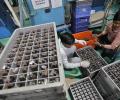
Auto component makers in India are bracing for a tough time. High absenteeism among workers owing to Covid-19, shortages of critical parts, and temporary closures of plants by automobile manufacturers have thrown a spanner in the works for the Rs 3.2-trillion sector, which derives 60 per cent of its revenues from automobile original equipment manufacturers (OEMs), with the balance split equally between replacement demand and exports. Car market leader Maruti Suzuki India on Saturday said it was extending the maintenance shutdown, which was from May 1 to 9, till May 16, "keeping in view the current pandemic situation". Some activities will continue in the plants.
Led by the country's largest car maker Maruti Suzuki, Ford India, General Motors and Toyota Kirloskar logged overall growth in sales volumes.

The industry players couldn't hide their disappointment.


Even as domestic passenger car sales declined 29.4 per cent between April and August this year, exports grew 6.5 per cent, partially cushioning the blow from slowing sales.

Automobile makers in India are embracing taxi-hailing apps such as Uber and Ola, hoping to ride on their expansion to sell more cars, a contrarian view to companies in Western markets that fear a drop in car sales due to them

Ajit Mishra, vice president, research, Religare Broking, answers your queries.
Japanese auto major Toyota Motor Corp will invest $ 350 million (about Rs 1,400 crore) for setting up a second plant in India as part of its plans to introduce a strategic small car in the country by 2010. The new plant will have a production capacity of 1 lakh units and will become operational by 2010. The new small car, which will have high localisation level, is primarily aimed at the Indian market. Toyota will also be investing further in the plant on support facilities.
Auto major Toyota Motors on Tuesday said it is studying the Indian market to launch its eco-friendly car 'Prius', but felt the current duty structure on completely built units CBUs would double the price of the vehicle.

Reflecting the mood, passenger vehicle sales in November either remained muted or skidded for most manufacturers as high fuel prices and the higher cost of borrowing dampened buying sentiment.

The ban does not speak about used luxury cars.

Turns down firm's plea for stay on CCI order; final order pending

One of the smallest players in India's car market, it is banking on new-look Etios to make inroads into the personal vehicle segment

High-end mid-sized sedans, comfy SUVs and entry-level luxury models steal their show.
After the easing of lockdown in mid-May, auto companies were able to resume production in a phased manner, but the ramp-up was slow due to a broken supply chain, and lockdown-induced restrictions.

While Toyota will acquire 4.94 per cent shares of Suzuki, worth $ 908 million, the latter will make a $ 454-million investment in the biggest automaker of Japan. Premium products from the Maruti stable such as the Baleno, Ciaz and Vitara Brezza will be sold under the Toyota brand with small changes.

Maruti Suzuki, Tata Motors and Hyundai stand to gain the maximum, given their large portfolio of products in the sub-4 meter segment.

Among those who have the most to lose from India's haphazard policies are dealers selling cars made by Toyota, Mahindra & Mahindra, Daimler AG's and Tata Motors' luxury arm, Jaguar Land Rover

Ajit Mishra, vice president, Research, Religare Broking, answers your queries

Ajit Mishra, vice president, research, Religare Broking, answers your stockmarket queries.

Ajit Mishra, vice president, Research, Religare Broking, answers your queries.

The models from Hyundai and Maruti, which might go on sale in October 2018 and February 2019, respectively, are set to revive a segment that had lost sheen to the compact SUV segment, lately
